On Hypermobility
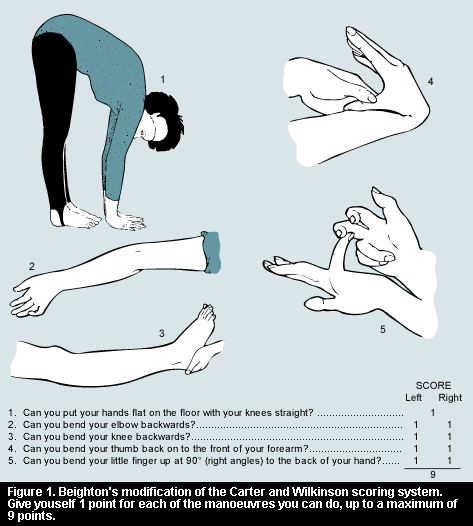 Can you do any of the movements on the picture to the right? If you do, chances are you have this condition called joint hypermobility.
It means you can move (some of) your joints more flexible than most people. It is also known as 'double jointed' or 'hyperlaxity' as your range of movements are larger than normal. In its very mild form there are few symptoms and need no treatment. But in its more severe form the joint can get dislocated easily. There is also a very rare form that is part of serious illness such as Marfan syndrome or Ehlers-Danlos syndrome.
How do you know you have hypermobility?
First you can check yourself using 'Beighton score' as shown on the picture above. Only about 3-5% adult can score more than 4 on that test. If you score more than 4 and experience joint pain in 4 or more of your joints for more than 3 months it is likely you have hypermobility. It is advisable that you consult your doctor to determine if the hypermobility is the caused of your pain or something else. For you doctor to confirmed the hypermobility diagnose, they are going to use the '1998 Brighton Criteria'.
There are four factors that cause hypermobility. First, the shape of the end of the bones. A shallow socket of your hip bone, for example, would give you a larger movement but it could also mean that your hip bone can dislocated more easily. Secondly, the weak or stretched ligaments due to altered collagen fibers. Then, the stiffness or tone of your muscles affect whether the joints is rigid or loosely held. The last but not least, your impaired sense of joint movements can lead you to overstretched your joints before realizing that you are doing it.
Hypermobility and you
Having hypermobility may affect your day to day life. For some, pain is part of life as their muscles have to work much harder when the joints are suppler than when they are rigid. If the hypermobility is caused by altered collagen, this may also lead to varicose veins or hernias.
Gentle exercises to strengthen the muscles are advisable but don't over do it. However, high impact exercises and contact sports are more likely to caused injuries or caused more pain. So, stay away from squash.
When you have pain, try to rest and physiotherapy first. If it fails, then try paracetamol. If the joint swells, non-steroidal anti-inflammatory (NSAID) drug such as ibuprofen may help. But be careful if you have stomach ulcers as it can caused bleeding. You can also use topical painkiller directly onto the aching joint. As chronic (long term) pain can lead to depression and in turn depression increases the pain, therefore you may need professional help to cope with it. Ask your doctor about pain management programmes.
According to Dr. Grahame, the leading researcher in this field, people with this syndrome need larger dosage of local anaesthetic than normal. Remember this fact when you need to do root canal on your next appointment with your dentist.
As their soft tissue is supple, sufferer of hypermobility should avoid surgery if possible because their soft tissue doesn’t always heal well and quickly. Some also prone to bruising easily and may require more blood transfusions if major surgery is carried out. Talk to your surgeon about this condition prior to surgery so they can modify the surgical technique accordingly.
Hypermobility is known for at least the last 30 years, but there are lots of doctors who tend to trivialize this condition. While those doctors having trouble diagnosing their patient’s illness even though the symptoms are clear, they sometimes label the sufferers as hypocondriacs which, of course, doesn’t help the patient at all. Try to talk to rheumatologist about your condition. If you live in the UK, there three hypermobility clinics, one of them is at University College Hospital in London.
All being said, there are some advantages in having hypermobility. Certain sports like gymnastics, diving, hurdlers need a wide movement/flexibility in certain joints. Flexible fingers can help musicians playing keyboard or string, for example. Dancers need the widest range of movement in most joints. How about a stint at Cirque du Soleil?
The thing about this syndrome, you can’t cure it but you can learn to live with it once you know you are having it.
For more information:www.hypermobility.org
Living with hypermobility syndrome